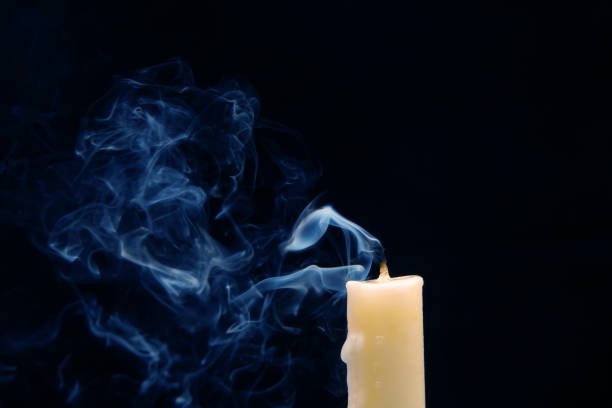
In our world today, there is almost no difference between day and night. Obviously it gets dark, our bodies get tired, and the clock moves from 8 p.m. to 10 p.m. to midnight. But nothing actually ends. The lights stay on, the internet stays on, and my office is in my house. My laptop is right there. My phone is right there. There is always another email I could answer, another idea I could explore, another problem I could solve.
I can keep going forever. And lately, I kind of have.
Over the past few months I’ve gotten into the habit of staying up until 2, 3 or even 4 in the morning. I’ve mostly thought about this as a sleep problem: I need to go to bed earlier, I need a better routine, I need more discipline. But I’m starting to wonder if that’s actually the wrong way to look at it.
Maybe my problem isn’t that I don’t know when to go to bed. Maybe I no longer know what night is.
Night used to happen to you
For most of human history, there were physical constraints that made the day end. It got dark. Shops closed. Other people went home. You couldn’t contact everyone at any moment. Even much more recently, computers lived at work or at school. You left the building and the computer stayed there. There was a physical separation between work and everything else.
Now I work from home. My office is a room in my house. The internet never closes. My phone gives me access to basically everything all the time. Darkness still arrives, but nothing else really changes.
I was listening to a book recently that mentioned night, and it made me think about how strange this is. If you fly over a city at night, it isn’t really dark. There are lights everywhere. The city may be quieter than it was during the day, but the physical distinction between day and night is much weaker than it once was.
We have slowly turned night into something we personally decide to participate in. Night begins when you turn off the lights. Night begins when you put your phone down. Night begins when you decide that the day is over.
And if you never make that decision, maybe the day just keeps going.
Yom Kippur and forced reflection
I started thinking about this more deeply on yesterday on Yom Kippur. Yom Kippur is, in some ways, forced reflection. You spend this enormous block of time in synagogue. You don’t eat. You say the liturgy. You repeat words that people have used for generations to examine their lives. Normal life is interrupted long enough that you can actually look at normal life.
That interruption made me realize that I don’t really have many endings in my days.
I just work.
I also realized that I struggle to prioritize my work. I don’t start the morning by deciding what actually needs to happen that day. I open my laptop and start doing things. One thing leads to another, then another, and eventually the whole day is gone.
There is no definition of what today’s work is, which means there is also no definition of when today’s work is finished.
That feels connected to another thing I’ve noticed lately: I can spend huge amounts of time chatting with Claude. It feels productive because I’m thinking, exploring, asking questions, and figuring things out. But I’m not entirely sure I’m actually doing more, or even doing higher-quality work. Sometimes it feels more like I’m trying to tame the beast.
AI removes another natural stopping point. In the past, eventually I might hit a problem I didn’t know how to solve and think, I’ll deal with this tomorrow. Now I can ask another question. Then another. Then explore another branch. There is basically no end to the amount of thinking available.
Even curiosity can turn into work.
Maybe night is a state, not a time
So I’ve been playing with a different idea: what if night isn’t really a time? What if night is a state?
The problem with saying, “Night starts at 10 p.m.,” is that absolutely nothing changes at 10 p.m. At 9:59 I’m sitting at my desk with my laptop open, my phone next to me, the lights on, and some problem in front of me. Then it becomes 10:00, and the room is identical. My brain is identical. The problem is still sitting there.
The clock has communicated a piece of information, but the world hasn’t changed.
I think I need something more physical than that. I need some transition that tells my brain that I’m no longer in the same part of the day. Maybe I need to create night.
That could mean deciding what tomorrow’s work is, closing my laptop, turning off the office light, and physically shutting the office door. My phone goes onto a charger somewhere else. The brighter lights in the house turn off. The environment changes.
Then the office is closed.
Not metaphorically. Closed.
Anything unfinished belongs to tomorrow.
Night doesn’t mean bedtime
This is the part that feels especially important to me. Night doesn’t have to mean sleep.
If I declare that night has started, I don’t necessarily have to get into bed. I could read. I could quilt. I could watch something. I could talk with my wife. I could call a friend. I could sit around and do absolutely nothing useful. Maybe I’m awake for another two hours. That’s fine.
Because the point isn’t night = I must be asleep.
The point is night = productive obligation has ended.
Another way of saying it might be: night begins when I stop trying to make progress.
I really like that distinction. During the day, I can make progress. At night, I can experience things without needing to make progress. Night isn’t the part of the day where I’m forbidden from working; it’s a part of life that has a different purpose.
That feels very different from simply imposing a bedtime on myself.
Physical rituals create states
This has also made me think differently about rituals in general. Shabbat isn’t just a particular day of the week. You light candles. You say words. You eat a meal. Things physically happen that tell you that you have entered a different state.
Leaving an office used to do something similar. You closed your computer, walked out of the building, got in the car or on the train, and went home. The transition took place in physical space. Your environment helped tell your brain that work was over.
Maybe time isn’t only a clock or a horizontal line moving endlessly from left to right. Maybe we experience time partly through states: work, home, weekend, night, morning. Rituals are what help us move from one state into another.
Without those rituals, everything blends together.
That feels particularly relevant to me because my sense of time is already not great. If the environment stays exactly the same, 6 p.m. and 11 p.m. can feel surprisingly similar. So maybe the solution isn’t more information about what time it is. I already have clocks everywhere.
Maybe I need the physical world to tell me: something has changed.
Today’s work and tomorrow’s work
There is another side to this experiment. If I want the day to end, I probably need to define what the day contains.
Instead of opening my laptop in the morning and immediately beginning to work, I want to start with a question: If only three things move forward today, what are they?
Not twenty things. Three.
Then everything else has a place to live. There is today’s work, and there is tomorrow’s work. Something can be important without needing to happen today.
That also gives me a better way to think about AI. Before I disappear down some fascinating Claude rabbit hole, I can ask myself: Which of today’s three things is this helping me move forward?
Sometimes the answer will be none of them. That doesn’t mean the exploration is bad. It may be interesting and it may eventually be useful. But it isn’t necessarily today’s work.
And if I can define today’s work in the morning, maybe I can actually declare it finished at night.
The two boundaries fit together nicely:
Morning: What constitutes enough for today?
Night: Today is over.
An artificial sunset
We have a baby coming soon, so it may seem like an absurd time to be thinking about creating some perfect nighttime routine. My nights are about to change dramatically anyway. But maybe that actually makes this a better time to think about the principle rather than trying to perfect a schedule.
I’m not really trying to figure out whether bedtime should be 10:30 or 11:00. I’m trying to figure out how a day ends.
Modern life removed a lot of the external boundaries that used to answer that question for us. I’m not going to give up electricity. I’m not getting rid of the internet. I’m definitely not getting rid of computers. But maybe I can recreate one thing those older constraints gave us automatically:
An ending.
Close the laptop. Dock the phone. Turn off the office light. Close the door. Let the house change.
Whatever is left can belong to tomorrow.
Night has started.
Maybe you don’t wait for night anymore. You create it.